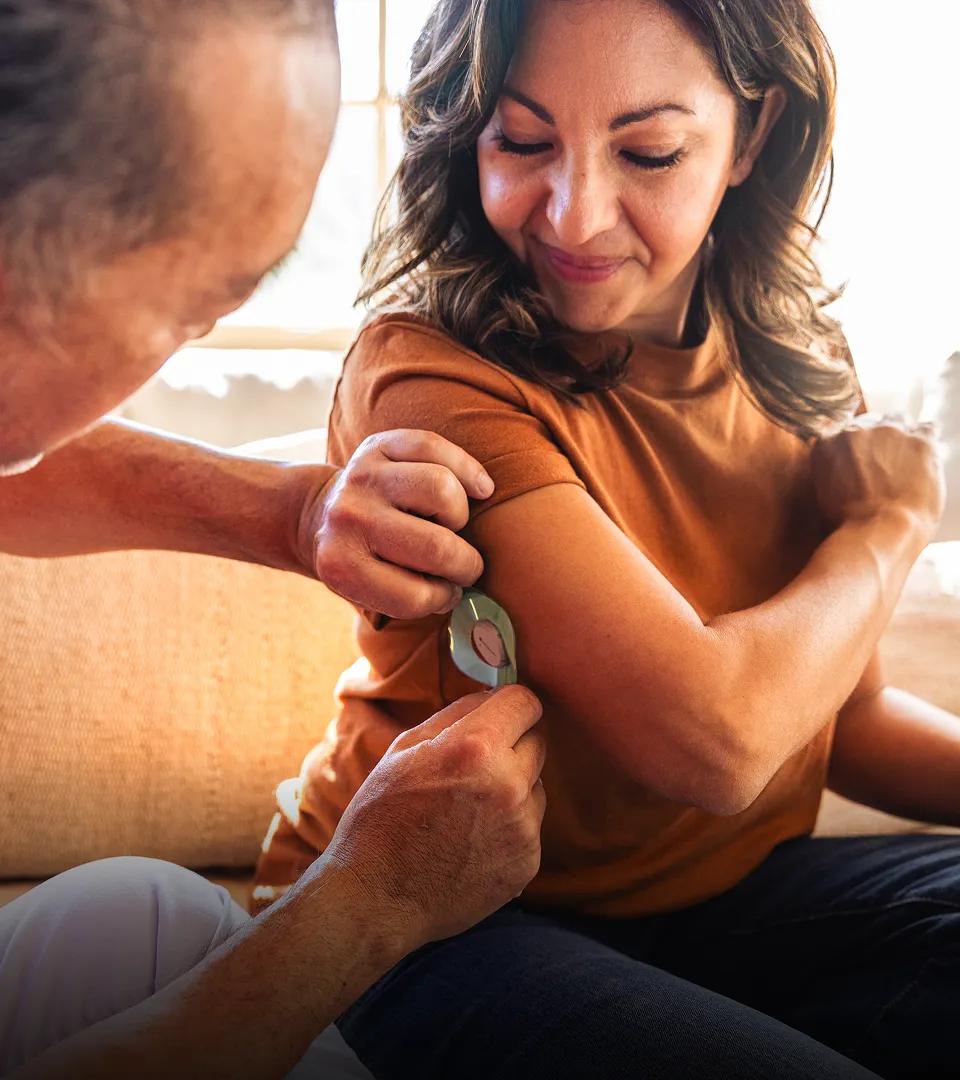
Improving real-world results with real-world data for GLP-1s, cardiometabolic care & beyond
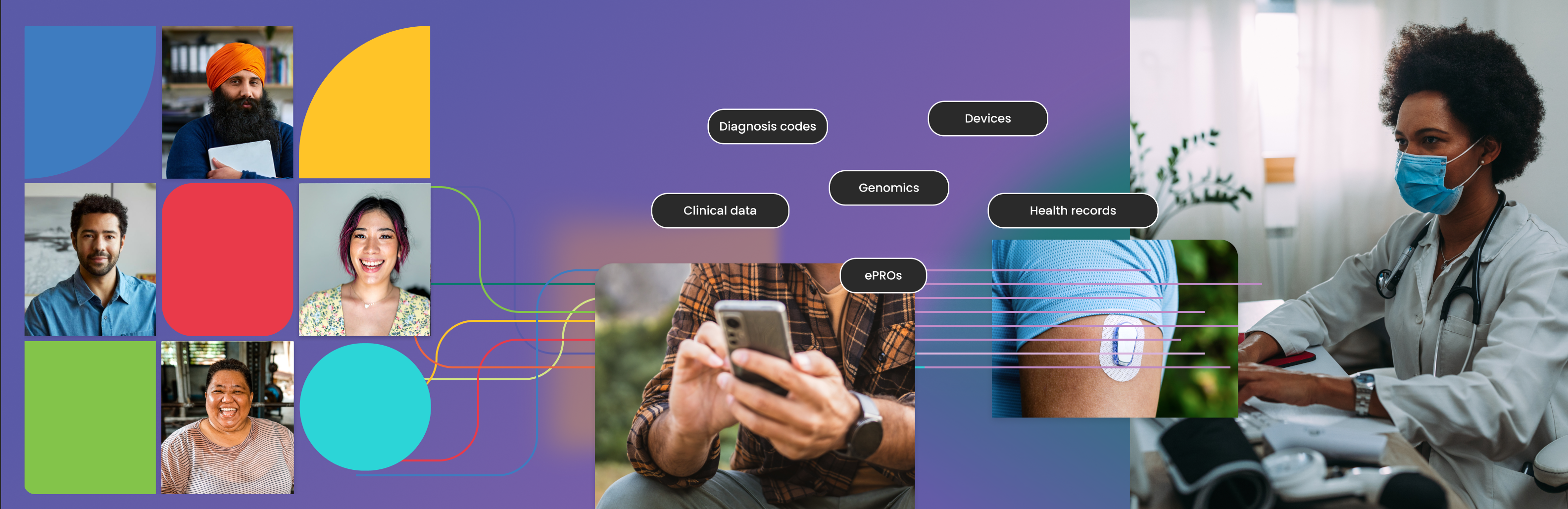
Cardiometabolic disease is an ever-growing public health crisis, spurring the need for better life-changing health insights and innovation at a faster pace. To keep up, biomedical research demands evidence generation that’s designed to represent the real world, providing a continuous perspective that captures the complexity of each individual's real-life health experiences with diabetes, obesity and related cardiometabolic conditions. Verily is dedicated to realizing this vision, building upon the foundation of the Verily-sponsored Baseline Health Study — a research initiative launched in 2017 that generated a deeply phenotyped, multi-dimensional map of health for over 2,500 individuals. The Baseline Health Study results have fueled over 20 publications that have deepened biomedical knowledge in many therapeutic areas, including cardiometabolic health, such as demonstrating patterns in walking data from wearables that may reveal early heart failure before symptoms appear, and that prediabetes is an active state of multi-system decline, not merely a risk factor.
This commitment to leadership in biomedical research and evidence generation continues with the Verily Viewpoint Evidence solution, fueled by datasets from the newly-launched and Verily-sponsored Lifelong Health Study and flagship, Cardiometabolic Cohort. This participant-centered research registry integrates multi-modal health data to help researchers answer the most pressing questions in contemporary healthcare and medicine, including the challenges starkly highlighted by the often mystified patient journeys with glucagon-like peptide-1 receptor agonists — or GLP-1s.
A GLP-1 dilemma: Knowing what vs. Understanding why
The first drug in the GLP-1 class came to market in 2005 for treatment of type 2 diabetes. Today, GLP-1 medications are still transforming treatment for diabetes, but also obesity, weight loss and other chronic conditions, such as chronic kidney disease, metabolic dysfunction-associated steatohepatitis, and obstructive sleep apnea. Yet even with time and use, the medical industry — payers, providers and innovators like pharmaceutical companies — still have unresolved questions, lacking a clear, contextual view as to why patients struggle with, switch, or stop treatment.
Why? Largely because researchers need more comprehensive, real-world data (RWD) from individuals about their real-world experience and behaviors over time, which is lacking from traditional sources like fragmented electronic health records (EHRs) and static claims. With more ongoing, high-resolution biological and behavioral data streams, researchers could reveal the context behind patient outcomes and cardiometabolic disease, and better understand the effectiveness of new treatments. Experiences with GLP-1 discontinuation is a primary case in point. Standard RWD can answer the what, showing that a prescription wasn’t refilled or that therapy was stopped, but this data may not provide clarity on the reason why. Was it due to significant side effects, perceived lack of efficacy, insurance hurdles, or medication unavailability?
The lack of context severely limits the ability to modify existing drug regimens, develop programs to improve patient outcomes, and uncover new therapeutic opportunities.
After the Big Bang, most of the universe’s matter was unaccounted for — dark matter. In diabetes management, the same is true: most of what’s relevant is in the darkness. This data isn’t in EHRs, nor is it being systematically captured elsewhere. Verily has a tremendous opportunity to help reveal the unseen.
Erich Huang, MD, PhD,
Verily Associate Chief Clinical Officer
for Technology and Informatics
Designed for research that reflects real life
The Verily Viewpoint Evidence solution empowers end-to-end evidence generation for clinical research, in part, from the newly-launched, Lifelong Health Study. The initiative is a Verily-sponsored, observational registry that continuously follows participants on their health journeys to provide a multi-dimensional, realistic view of how health changes over time. This consented, engaged community will help transform RWD from static pulls into a dynamic, ongoing participant conversation.
As Lisa Lehmann, MD, PhD, and Verily's Medical Director for Clinical Research describes, “Through the longitudinality and integration of a vast array of health datasets, the Lifelong Health Study will provide pertinent, missing RWD to accurately portray the continuum from illness to wellness and vice versa.”
- Lifestyle signals and self-report outcomes: Lifestyle signals are emphasized as being highly relevant for understanding cardiometabolic disease, yet they are largely absent from traditional healthcare data. Also, patient-reported outcomes (PROs), including quality of life, physical activity levels, and other lifestyle factors, are highly pertinent to cardiometabolic disease etiology and clinical sequelae.
- Biometric data, wearables and devices: Often, EHRs also lack granular biometric data like minute-by-minute continuous glucose monitor (CGM) readings for diabetes patients, typically only capturing acute, bedside measures.
Learn more, directly from Verily experts. Watch the on-demand webinar, From data gaps to dynamic dialogue: A new era of real-world evidence.
Focus on Verily’s Cardiometabolic Cohort
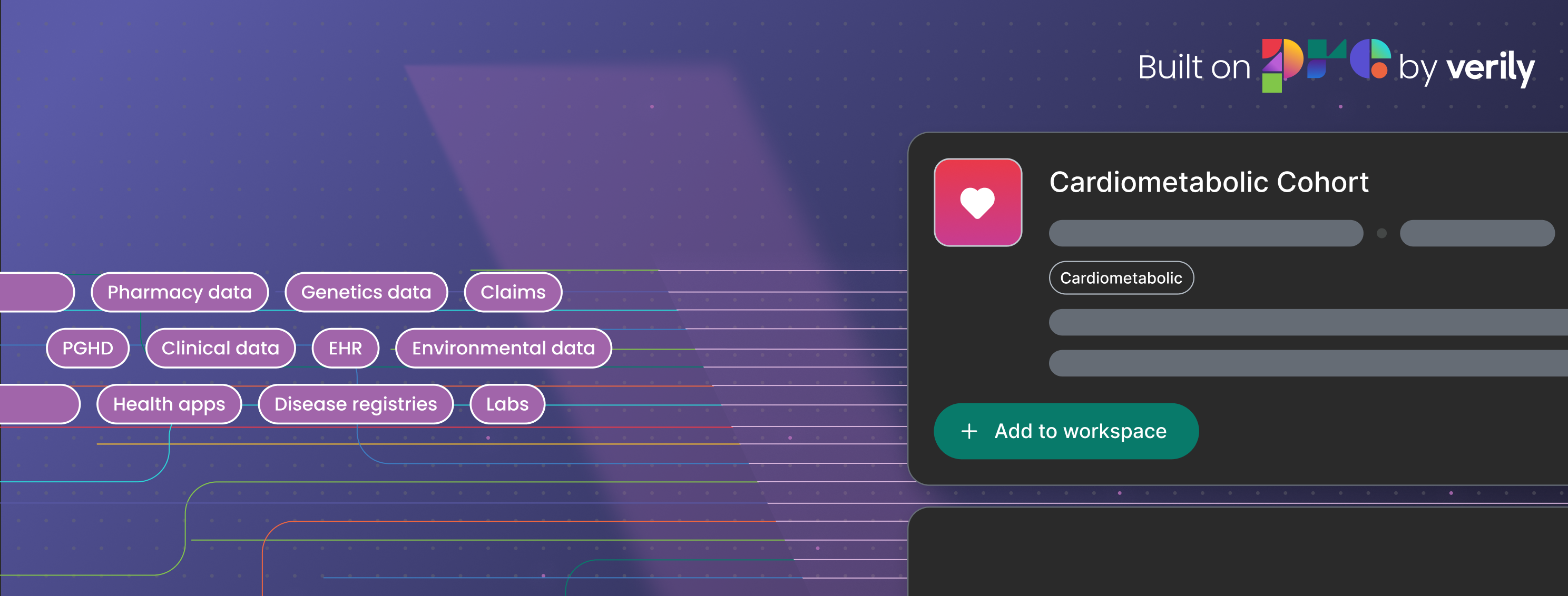
Verily’s integrated evidence capabilities are built on the Pre Platform — an AI-native platform for precision health that utilizes a FHIR-native approach to blend complex health data into actionable, reusable evidence. This platform enables Verily’s flagship Cardiometabolic Cohort, a dataset that is sourced directly from this engaged Lifelong Health Study community.
This deep, diverse health data — clinical, patient-reported, medication and device/wearables — within the cohort and curated by Pre, will help also bridge fragmented data for GLP-1s and other cardiometabolic research and care, enabling clearer clinical context and greater real-world relevance.
- Clearer context: Through AI, the Pre platform provides the capability to extract key details from EHR, unstructured clinical notes and summaries. This could potentially reveal reasons that patients discontinue or switch GLP-1 therapies, such as side effects, limited efficacy, insurance barriers — again, beyond what traditional RWD can demonstrate, helping transform siloed data into research-ready insights and bespoke, derived variables.
- Greater relevance: The Pre platform links clinical data with continuous biometric, lifestyle, and participant-reported inputs, such as adherence and future device data, like readings from CGMs. Through data integration and harmonization, researchers gain a high-resolution view of diabetes and obesity disease states and treatment — facilitating research advancements, such as novel biomarker discovery, or care improvements, such as more precise patient stratification.
Real-world data on GLP-1 use, such as dosing and outcomes for weight loss, can differ significantly from that reported in clinical studies.
Decoding causes of GLP-1 successes and setbacks
Viewpoint Evidence provides continuous insights through easier, ongoing connections with Lifelong Health Study participants for deploying surveys, drawing from a pre-engaged, consented population that is ready for rapid, precise sub-cohort selection. This can advance GLP-1 and cardiometabolic research by reducing the time, cost, and complexity of recruitment and screening, enabling efficiency from study design to real-world insight.
Combined with easier access to integrated clinical, lifestyle/behavioral, and device/wearables data from the Cardiometabolic Cohort, this allows researchers and life sciences teams to build a complete picture of cardiometabolic disease progression and use of GLP-1 therapy. Key applications include:
- Discovering biomarkers and predictors of disease and exacerbation.
- Quantifying patient quality of life, satisfaction, and GLP-1 side effects.
- Evaluating real-world GLP-1 initiation, adherence, switching, and discontinuation.
According to Andrew Trister, MD, PhD and Verily Chief Scientific and Medical Officer, “These precision evidence capabilities are necessary to address care challenges in clinical practice and people’s daily lives. For example, let’s consider that 20% of patients on GLP-1 therapies don’t have significant weight loss despite adherence, and genetics offers no clues as to why there is variability in response. Verily can facilitate a study of this left-out cohort, revealing the myriad of reasons for non-response — cost, incorrect usage, side effects, etc. — that are difficult to track using typical health data alone.”
This high-resolution, continuous data may be valuable to pharmaceutical companies, particularly for GLP-1 research, as it allows monitoring and linking of patient-reported symptoms and side effects, such as specific gastrointestinal side effect profiles, to clinical events and device data. Dr. Trister goes on to explain that this deep understanding enables the refinement of existing GLP-1 treatment, such as through the potential microtitration of GLP-1s to optimize individual patient outcomes and side effect management, such as limiting nausea.
The tip of the GLP-1 iceberg
As researchers delve deeper into the mechanisms of action and effects of GLP-1s and related, emergent and next-generation drug classes and formulations, they are expanding investigation on potential applications beyond cardiac and metabolic diseases. A key area focuses on the role of GLP-1s in reducing inflammation. Dr. Lehmann notes, “Since inflammation is believed to drive chronic diseases more generally, and because GLP-1s appear to target inflammatory pathways, they may have very far-reaching uses and health consequences beyond diabetes and weight loss, which is very exciting to me. Verily will help companies unlock pharmacologic applications in these areas, such as connections to longevity research. Basically, the research community believes we’re just at the ‘tip of the iceberg’ in understanding GLP-1 capabilities.”
Connecting real-world data to real-world results
So as the GLP-1 indications and use expand, so does the need to understand their everyday impact for revealing the mechanisms of disease progression and recovery or remission. Verily’s integrated evidence capabilities help fill these critical gaps by uniting high-resolution clinical, lifestyle, and behavioral data, in part, from continuous patient input. This approach empowers and equips pharmaceutical and life science teams with research-ready, relevant data to refine therapies, design more effective adherence strategies, and accelerate progress toward precision cardiometabolic care and beyond. The result: a clearer, more complete understanding of how GLP-1s and other future therapies can deliver on their promise for individuals in their real-lives.